I'm currently reading way too much complete nonsense about asbestos in my timeline - probably because of Trump's repeal of the complete asbestos ban. Let's untangle a few things:
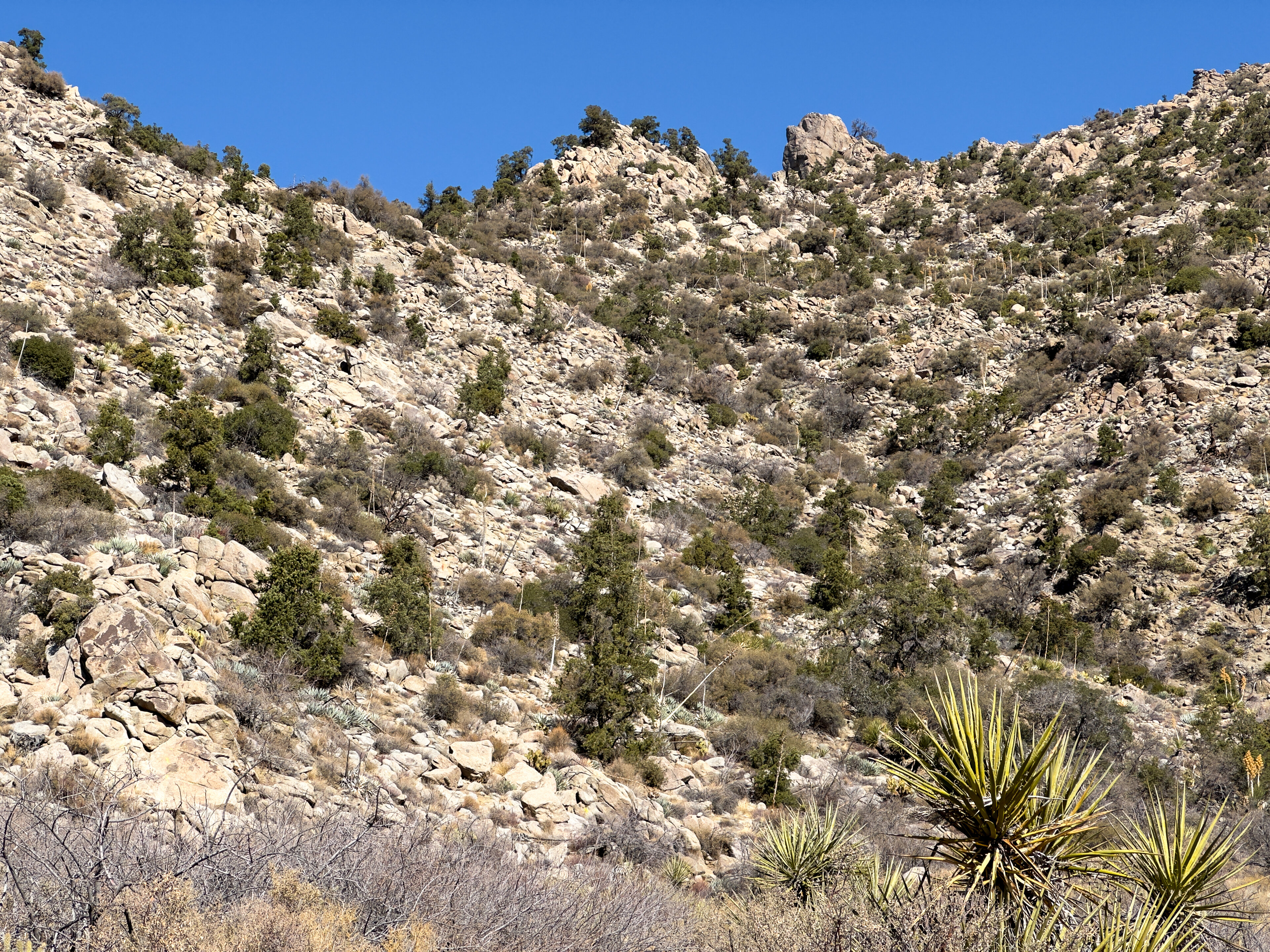 Natural asbestos mountain in California, Riverside County
a) What this is actually about
This current issue is NOT about asbestos as a building material as many know it. It's primarily about asbestos as a separator element in some niche applications of electrolytic cells in the chemical industry. Asbestos is excellently suited for this due to its high temperature resistance and because it doesn't react with the relevant chemicals.
b) The actual danger from asbestos
Let's get to the actual point: the danger from asbestos.
First of all, asbestos is not one substance, but a collective term for naturally occurring fibers made of silicate minerals.
Contrary to popular belief, none of these substances are toxic in themselves. Not at all.
The harmful effect comes entirely from the purely physical properties. Or put differently: if you pull thousands of tiny needles into your lungs, it's totally unsurprisingly not healthy.
c) Blanket bans are emotionally driven
Blanket asbestos bans are emotionally driven, not factual. It's somewhat reminiscent of the nuclear phase-out: just because a Russian RBMK blows up in your face when operated incorrectly doesn't make nuclear technology as a whole unsafe.
In the past, asbestos was handled EXTREMELY carelessly in some cases: cutting it with an angle grinder on construction sites, using it as fake snow (e.g. in films like Wizard of Oz, but sometimes also simply as Christmas decoration). As a result, very many people pulled very many tiny needles into their lungs and then developed significant health problems in the following decades. Bad idea.
Asbestos used in a way that it doesn't enter the breathing air as free-flying fibers is absolutely harmless. This is the case with the specific application in electrolytic cells, for example, but also actually in the building materials sector when it's bound in synthetic resin or cement. Here, the danger only arises during careless demolition with crowbars and saws.
d) The problem with substitute materials
We have no full replacement and cannot have a replacement. Since the harmful effect is not chemical but stems from the structure of the fibers, ultimately every fiber material with similar properties has similar problems. Especially when you need very high-temperature-resistant fibers, "soft" fiber materials simply don't work.
Conclusion
In summary, I believe we should stop demonizing asbestos across the board, but also not handle it as carelessly as we did in the past. We simply need common sense in its application.
(Okay, probably asking for a bit much).